
 Gilpin Historical Society
by David Forsyth, PhD
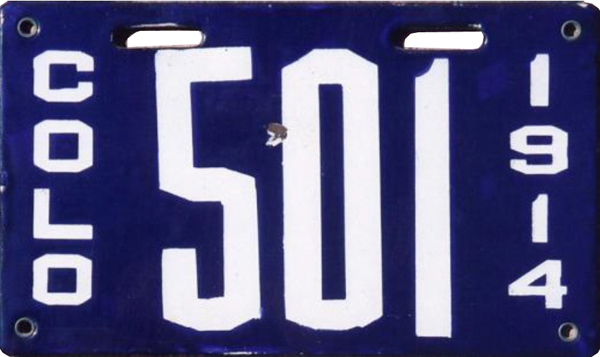
For many years, Colorado’s license plates bore the slogan “Colorful Colorado” in reference to the state’s natural beauty. But, just as colorful is the history of the license plates themselves. Colorado first required owners to register their vehicles with county clerks in 1910, but provided no specifics for doing so. Vehicle owners had to come up with their own numbers, and some used their addresses or ages, while others used random numbers that simply occurred to them. After registering with clerks, owners also had to make their own license plates, with some attaching house numbers to their cars wherever they thought most appropriate, while others fastened numbers to leather or wooden tags that hung from the rear axles. The first state-issued license plates (white porcelainzed metal with black numbers) came in 1913. The state switched to steel plates in 1916, and continued to issue new plates every year, allowing motorists to keep the same numbers if they wished, which led to heated competition among drivers to get low-numbered plates when they ever became available. Denver oilman and politician E.E. Sommers, for example, had license plate number 1 for many years prior to his death. His wife then took it over, until it was issued to future Gilpin County resident Emily Griffith in 1931.
Support authors and subscribe to content
Subscribe to read the entire article.


