

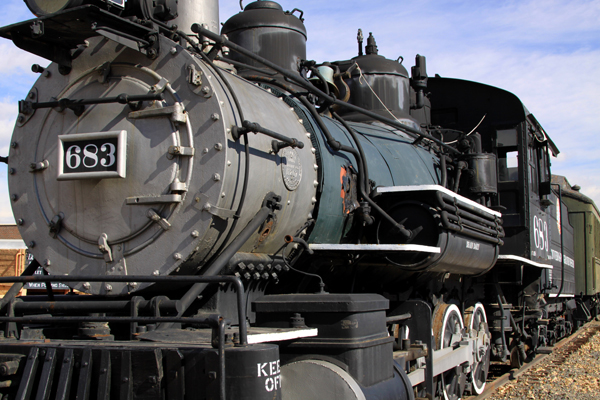
 Free Attendance Day on Saturday, March 7th
by Dave Gibson
As soon as the last spike was driven completing the transcontinental railroad at Promontory Summit, Utah Territory, in 1869, it represented a monumental technological achievement and was a source of national pride. Connecting San Francisco to Council Bluffs, Iowa, and points eastward, it provided a vital economic link facilitating further settlement of the American West at an unprecedented pace. By land, arduous and dangerous wagon trains out of Omaha were one of travelers’ only options to the west coast before the transcontinental railroad. By sea, it cost $1,000 and six months to sail around Cape Horn, South America, to California from New York City. If one wanted to risk contracting yellow fever, the Isthmus of Panama (long before the existence of the Panama Canal) was another undesirable choice. By train, a person could now travel from the Atlantic to the Pacific for as little as $65 in only a week’s time.
Support authors and subscribe to content
Subscribe to read the entire article.


