

 30 years ago – May 22, 1987
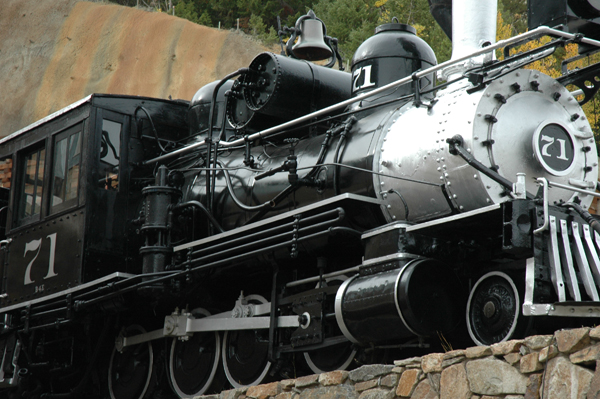
Engine #71 had its boiler fired up for the first time in 50 years on May 15. The steam test proved to be successful, much to the delight of many people in attendance. Gray-black smoke poured from the pipe and the whistle sounded. At a formal demonstration on May 16, Engine #71 rolled down the track under its own power. Members of the Gilpin County Historical Society as well as locals and non-locals were present at the event. Court Hammond, president of the Black Hawk-Central City Narrow Gauge Railroad Company, received a lot of praise for his time and effort in restoring the historic train.
There will be another museum located within the City of Central. A Special Use Permit for a museum at the Thomas-Billings house, located within a residential district, was granted by the Central City Council on Tuesday. Despite opposition to the proposal by William C. Russell, Jr., and his attorney, Albert Dawkins, the council unanimously agreed to grant the permit. Jack Hidahl, city clerk and administrator, read aloud three pages of recommendations submitted by the city’s planning commission. The recommendations were presented to the council. Six of the seven members the Planning Commission voted to recommend the Special Use Permit. They were Chairman Rand Anderson and members diBenedetto, Schmalz, Macri, Hidahl, and Tom Robb. Jim Helbig was out of state at the time of the meeting. The recommendations included conditions and stipulations that were drawn up by the City Attorney Jerald Dewitt upon request of the planning commission. Dawkins, representing Russell as an adjacent property owner to the Thomas-Billings house, asked to speak before the council took action on the permit. He presented a certified letter mailed to Russell from the planning commission members as well as a published notice announcing the public hearing. Dawkins noted that the certified letter and the legal notice fell short of the proper and legal date deadlines. He pointed out that the city council did not have enough time to consider the application prior to the public hearing. According to Dawkins, two of the city aldermen, present at the meeting, had not seen the recommendations before the meeting began The two aldermen were Allen and Paul, said Dawkins. Dawkins questioned the speed that the planning commission members and council members were pursuing in granting the Special Use Permit. He said, “There may be bias and prejudice toward the former mayor,” referring to Russell. Dawkins said that the proposed parking area for a museum does not comply with the city ordinance. Inventory of personal property remaining within the house had not been completed. Adjacent property values will decrease, said Dawkins. Russell addressed the council, “I vehemently opposed this.” he said. He continued that his house, located on the east side of the Thomas-Billings house, is only 102 and a half inches away at the farthest point from the proposed museum. According to Russell, the house on the west side, owned by the Central City Opera Association, is 25 feet away at the closest point. Mike Leslie, one of the people who have a contract to purchase the house, contingent upon the permit, read a letter from Carol Wise of Georgetown. She lives adjacent to the Hummel House Museum. She wrote that the museum was no problem in her neighborhood and felt it is a “historical asset to our community.” Leslie also read a letter from R. Davis of the Blue Spruce Realty Company in Georgetown. According to Davis’ letter, the close proximity of the Hummer Museum had no effect on residential evaluation. After further discussion, the Special Use Permit was unanimously approved contingent upon an application by the Leslies’ before the Board of Adjustment for a parking variance. The Leslies’ had applied for the variance before the meeting was held.
Support authors and subscribe to content
Subscribe to read the entire article.


